Warzone Iri Invitational Proves Ranked Skill Gap
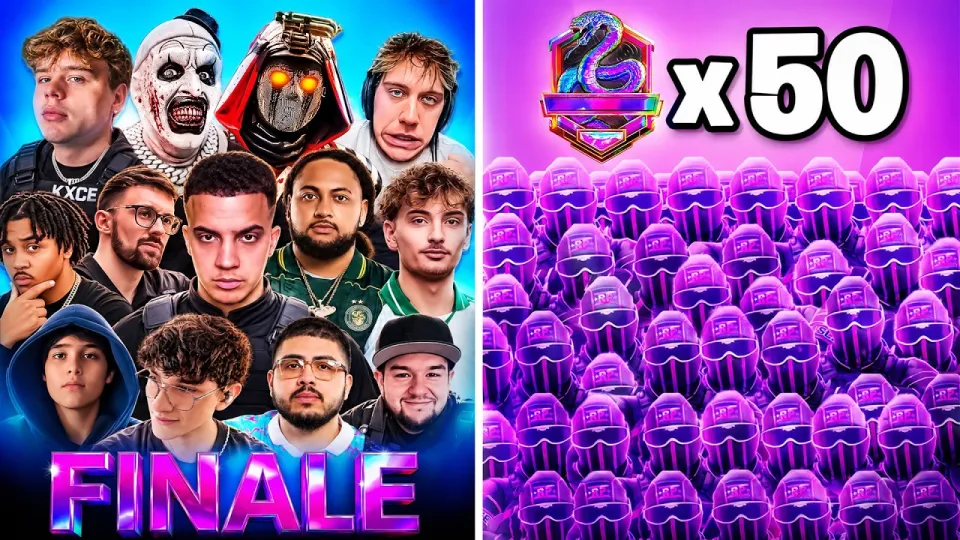
Video: Can 50 Iridescents Defeat STREAMERS? (FINALE)
Need articles like this for your video? They help promote it on YouTube and Google — order them in the Telegram bot @sat_sit_bot. The bot writes and publishes the articles itself (with your YouTube video embedded) on popular topical websites (no ads). Your first 50 articles are free.
· based on the channel Swagg
Key takeaways
- Format: 50 Iridescent-ranked players versus a lobby of established Warzone streamers in solo customs on Rebirth Island.
- Six games total, played under Warzone ranked rules, with $2,000 on the line in what Swagg billed as the first Iri Invitational.
- Featured names included Shifty, Hisoka, JoeWo, Metaphor, Kxce, Diablo, Dongy, Kenner, Ketchup, Repullze and Saxzu.
- A dedicated segment titled 'Is Kenner Cheating?' split the community, with viewers calling for him to prove it on LAN.
- Viewers immediately asked for a sequel with Biffle, Booya and Ayden added to the roster.
The Warzone Iri Invitational answered a question ranked players argue about constantly: a full lobby of Iridescent-ranked grinders can absolutely hold their own against famous streamers, and in Swagg's six-game Rebirth Island solo customs the gap between "ranked demon" and "big name" came down to individual fights rather than reputation. The full series finale, with all POVs, is built around that premise, and you can catch Swagg live on his Twitch channel for more events in the same format.
The setup is simple enough to copy for your own community night: solo Rebirth Island customs, ranked rules switched on, a mixed lobby of high-rank ladder players and recognizable streamers, and a $2,000 prize pool on the line. Six games, one winner's circle, and a running argument in chat about who actually deserved the Iridescent badge.
How the Iri Invitational format worked
The event's core idea is that ranked rating is a claim, and a custom lobby is the test. Swagg framed the finale as 50 Iridescent-level competitors against a streamer squad, played as solo customs on Rebirth Island with ranked settings enabled so that kills, placements and loadout rules carried real weight.
- Six games made up the finale, each with its own POV coverage so viewers could follow a favorite player rather than the broadcast alone.
- Solo customs removed team carries from the equation: no squadmate to bail out a bad rotation.
- Rebirth Island kept respawns and pace high, which favors players with strong gunskill and fast decision-making over slow zone play.
- $2,000 prize gave the lobby a real incentive structure instead of a friendly scrim.
The roster is the other half of the appeal. Alongside Swagg, the lobby pulled in Shifty, Hisoka, JoeWo, Metaphor, Kxce, Diablo, Hero, Dongy, Kenner, Ketchup, Repullze, Saxzu, Lucky Chamu and a long list of invited Iridescent players. That mix of content creators and ladder specialists is what turns a custom into a debate.
Streamers versus ranked grinders in Warzone
The interesting tension in Warzone is that visible skill and ranked rating do not always point at the same player. A streamer can look untouchable in highlight clips built from squad wipes, then struggle in a solo lobby where every engagement is a duel and third parties arrive on schedule.
Iridescent, the top tier below the very highest ranks, is earned through sustained placement and kill performance across many matches. That means an Iridescent player typically has three things a highlight-reel creator may lack: consistent centering and recoil control under pressure, a reliable rotation instinct on small maps like Rebirth Island, and the patience to avoid fights that do not pay.
In a solo custom, those traits compound. There is no teammate to reset a lost gunfight, so a single mistimed push into a stairwell ends the game. Viewers watching all POVs noticed exactly this: the ranked players tended to take cleaner fights and reposition earlier, while some big names chased kills and paid for it.
The Kenner question and the cheating debate
The finale dedicates a full segment to whether Kenner was cheating, and that segment became the most argued-about part of the event. A clip-driven community will always suspect a low-profile player who wins duels against established names, and the reaction split cleanly: some viewers insisted the gameplay was obviously illegitimate, others pointed out that strong aim and unusual angles are not proof of anything.
What the debate actually revealed is a structural problem with online competition. There is no LAN, no referee, and no anti-cheat verdict attached to a YouTube custom, so suspicion fills the vacuum. The most common demand in the comments was straightforward: put the player on LAN, the way Ketchup has competed at in-person events, and let the result speak.
For organizers, that is a useful signal. Any recurring invitational format will eventually need one of two things to stay credible: an in-person or monitored final, or a transparent review process when a performance looks anomalous. Otherwise every standout result gets discounted, which is unfair to the player and boring for the audience.
What viewers wanted more of
The comment section read like a wishlist for a second season, which is a good sign for a first-year event. Three requests came up repeatedly.
- More of the same, annually. Viewers described the series as the best Warzone content in a long stretch and asked for it to become a yearly fixture rather than a one-off.
- A wider roster. Biffle, Booya and Ayden were the names most often cited as missing, with fans framing a Biffle-versus-Kenner matchup as the dream ticket.
- More commitment from participants. Several commenters were annoyed that some invited streamers left early after rough games, arguing that a $2,000 event should require players to see all six games through.
There was also genuine appreciation for under-the-radar performances. Metaphor drew repeated praise for crisp aim and smart use of smoke, including leveraging mouse-and-keyboard advantages in ways that changed fights. That is the quiet value of a mixed lobby: it surfaces players who do not have the biggest audience.
Rebirth Island ranked and the current Warzone meta
Rebirth Island remains the map that best rewards the skills this event tested. Its tight sightlines and verticality mean fights are decided by centering, movement and audio awareness rather than long-range laser beams, and respawns keep the pace high enough that a lobby of 50 skilled players never goes quiet.
Ranked settings matter here. When custom lobbies run ranked rules, loadout restrictions and kill values push players toward the same weapon choices you see on ladder, so the event doubles as a meta showcase. If you want to improve at Warzone, watching all POVs of a lobby like this is more instructive than watching a highlight reel: you see the rotations that failed, the fights that were declined, and the positioning that produced clean kills.
For players grinding toward Iridescent, the takeaway from the finale is unglamorous. Win your duels, avoid unnecessary third parties, and treat every stairwell as a potential death trap. The ranked grinders in this lobby did not out-aim the streamers by a wide margin; they made fewer catastrophic decisions.
Useful links
- Swagg on Twitch — live streams and future invitationals.
- FaZe Clan Nuke Squad merch — apparel from Swagg's store.
- Swagg's Discord — community, customs and event announcements.
- Swagg on Twitter — schedule and event updates.
- Swagg on Instagram — clips and behind-the-scenes posts.
The verdict on streamer invitationals
The Iri Invitational works because it replaces opinion with matches: put ranked players and streamers in the same solo lobby, run six games, and let the scoreboard settle the argument. The Kenner controversy is a reminder that online-only competition will always carry suspicion, and the fix is a monitored or LAN final rather than more arguing in chat. Swagg, as the organizer and host of this all-POV series, has effectively built a template other creators can borrow, and the audience response suggests the format has room to grow into a recurring event with a bigger roster and stricter attendance rules. Until then, the finale stands as the clearest look yet at how Warzone's ranked ladder compares to its content-creator elite. Follow Swagg on Twitch to catch the next one live.
Source: Can 50 Iridescents Defeat STREAMERS? (FINALE) · Markdown version
Questions & answers
What was the Warzone Iri Invitational?
It was a custom Warzone event organized by Swagg that placed 50 Iridescent-ranked players against a lobby of well-known streamers. The finale ran six games of solo Rebirth Island customs under ranked rules with a $2,000 prize pool.
Why did viewers accuse Kenner of cheating?
Kenner outperformed established names in duels, and the community has learned to distrust standout performances in online-only events with no LAN or referee. There was no official anti-cheat verdict, so the segment became a debate rather than a ruling, with many asking for an in-person test.
Which players were missing from the lineup?
Comments most often named Biffle, Booya and Ayden as absentees, and fans specifically wanted a Biffle versus Kenner matchup. Several viewers also complained that some invited streamers left early after losing games.
Does ranked rating in Warzone reflect real skill?
Iridescent requires sustained placement and kill performance across many matches, so it reflects consistency, positioning and decision-making rather than pure aim. A solo custom lobby is a better test of that than squad highlight clips, which is exactly what the event demonstrated.